
Do you feel tired every afternoon? Do workouts that used to work not work anymore? Does your mind feel foggy, even for small tasks? If yes, you’re not alone.
Hormones are messengers in your body. They control your energy, mood, skin, bones, and weight. As you age, hormone levels change – slowly in men, faster in women during menopause.
But the good news is you don’t have to live with it. Better sleep, healthy food, and exercise can help with improvement. In some cases, medical support helps too.
One growing option is hormone therapy — a doctor-guided treatment that helps restore healthy hormone levels.
How Hormones Change as We Age?
With age, our body naturally starts making fewer hormones. Especially women face a sharp drop in estrogen and progesterone during menopause.
Men also see a decline in testosterone levels by 1-2% every year when they reach the age of 40. This age-related decline is clinically referred to as late-onset hypogonadism.
These internal changes speed up aging across your entire body:
- Bones: Bones start to lose strength, making them more likely to break or crack.
- Heart: A decline in hormones majorly affects your heart as your blood vessels stiffen up.
- Brain: You start dealing with frequent memory slips and brain fog.
- Muscle: You lose muscle mass, which lowers strength and slows your metabolism.
Timing is everything for any problem. If you get treatment on time, you can avoid a worse situation. So, starting regular hormone therapy from today can reduce the risk and will help in keeping your body strong.
How Hormone Therapy Helps Aging Women?
Menopause and perimenopause decrease ovarian hormone production, impacting both physical and psychological well-being. Hormone therapy can help by replacing these hormones, improving both your physical and mental health.
Some of the most important health benefits of hormone therapy for aging women are as follows:
- Bone Health: It prevents the breakdown of bones and reduces the chances of fractures significantly, as per the NIH.
- Heart Protection: It maintains the elasticity of the blood vessels, preventing plaque buildup.
- Improves Brain Function: It increases memory and reduces the risk of dementia.
- Quality-of-Life Improvements: It prevents hot flashes and mood swings.
- Urinary Health: The local application prevents the thinning of tissues and reduces urinary infections.
How Hormone Therapy Helps Aging Men?
For men, signs of low testosterone include constant tiredness, unexplained weight gain, muscle loss and lower libido & mental drive. When a blood test confirms low testosterone, Testosterone Replacement Therapy (TRT) fixes this imbalance.
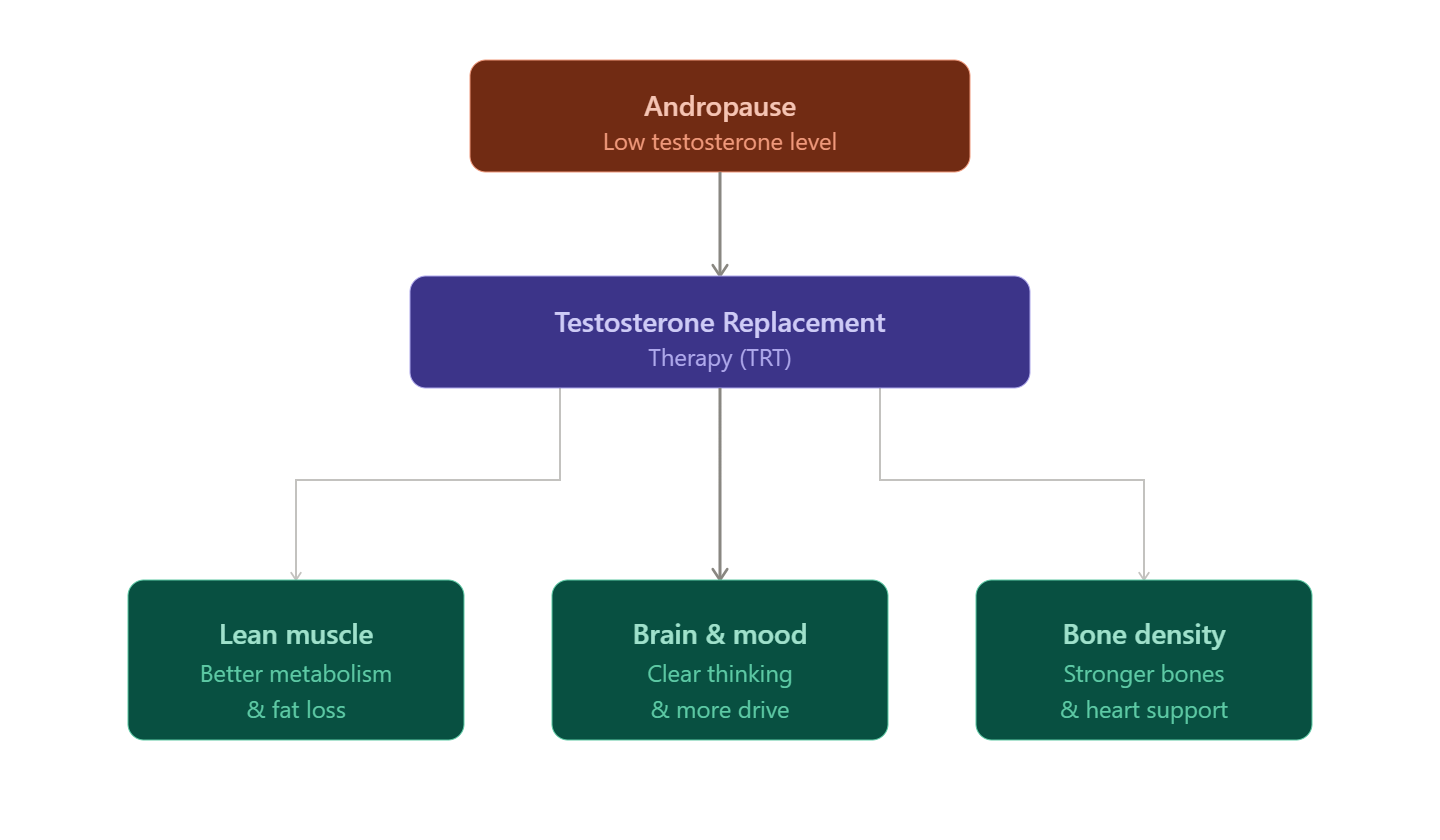
Men who use a customized TRT plan usually see quick physical improvements. The treatment builds lean muscle, burns stubborn belly fat, and gives a big boost to daily energy. It also clears up brain fog, improves mood, and strengthens bones while supporting heart health. The best candidates for this treatment are men who have clear symptoms and blood tests that prove their testosterone is low.
The Right Time to Start Hormone Therapy
Timing matters a lot with hormone treatments. For women, the best time to start hormone therapy is within 10 years of starting menopause, or before turning 60. Starting too late, after blood vessels have already hardened, reduces the benefits and can increase heart risks.
For men, the best time to start is when symptoms begin to disrupt daily life and when blood test results show low numbers. Before starting any plan, patients must get detailed blood tests. These tests check cholesterol, metabolism, and exact hormone levels to make sure the treatment is completely safe.
For added benefits, some patients pair hormone therapy with peptide therapy, which can support muscle recovery, sleep quality, and overall energy levels.
The table below shows the best timeline, tests, and goals for starting treatment:
|
Group |
Best Time to Start |
Required Blood Tests & Exams |
Main Health Goals |
|
Women |
Within 10 years of menopause (or before age 60) |
Estrogen, Progesterone, Cholesterol panel, Mammogram, Bone density scan |
Keep bones strong, protect the heart, clear up brain fog, stop hot flashes |
|
Men |
When symptoms of low testosterone appear (ages 40–60+) |
Total & Free Testosterone, PSA (prostate check), Blood count, Cholesterol panel |
Rebuild muscle, lose belly fat, improve focus, support heart health |
Hormone Therapy Myths vs Facts
It is important to separate old rumors from modern medical facts. The table below explains the truth about common beliefs regarding hormone therapy:
|
Common Myth |
The Real Medical Fact |
What Doctors Agree On Today |
|
HRT always causes cancer. |
Modern hormones match natural molecules. The FDA removed strict warnings for women under 60. |
Safe and helpful for most healthy adults. |
|
Hormone therapy is only for women. |
Men lose 1% of their testosterone each year after age 30, which can lead to weaker bones and weight gain. |
TRT is a proven tool for male health and energy. |
|
Wait until symptoms are terrible. |
Hormone loss damages bones and arteries quietly before you feel severe symptoms. |
Early low-dose therapy prevents permanent bone and heart issues. |
Risks and Side Effects of Hormone Therapy
The treatment is generally harmless for people without any underlying conditions, there are certain cases when the hormone treatment is contraindicated, mainly in cases of patients with a history of breast cancer, clotting problems, unexplained bleeding, and serious liver diseases.
Common side effects that can be easily managed by adjusting the dosage or the treatment itself include bloating, mild acne, and similar issues. That is why visiting your physician regularly and conducting blood tests is important. In addition, bioidentical hormones may be a preferable choice compared to older synthetic drugs, as these hormones cause fewer or no side effects.
Ready to Start Your Hormone Health Journey? Talk to the Team at Mesa Weight Loss
If you want to take control of how you age, the medical experts at Mesa Weight Loss are ready to help. Contact us today to set up your blood test and get a personalized plan made just for your health and energy.
Frequently Asked Questions
How long do I need to take the hormone therapy?
The requirement for hormone therapy depends on the individual’s health and personal preference. Regular consultations with your doctor will help you understand your requirements regarding how much time you need.
How can I start the process, and what can I expect from the first consultation?
To start, just schedule a visit to Mesa Medical Weight Loss. At your first consultation, you will undergo a blood test and develop a personalized health and energy program with the specialists.
Do non-hormonal alternatives exist?
Yes, there are hormone-free alternatives available for treating symptoms. These include various medicines, lifestyle changes, peptides and natural supplements.